Sharks’ slow evolution explains low cancer rates (opens in a new tab)
Study unveils secret of low cancer rates in sharks, but shark evolution means difficulties adapting to changes in the ocean environment


Study unveils secret of low cancer rates in sharks, but shark evolution means difficulties adapting to changes in the ocean environment
The teeth were found at Mammoth Cave National Park, which encompasses some of the Mammoth Cave, the largest known cave system in the world.
The SSC outlines its position in relation to existing shark control programs and culls and provides context to allow managers and governments to make informed decisions when faced with delicate situations. We strongly encourage non-lethal approaches as a response and management option.
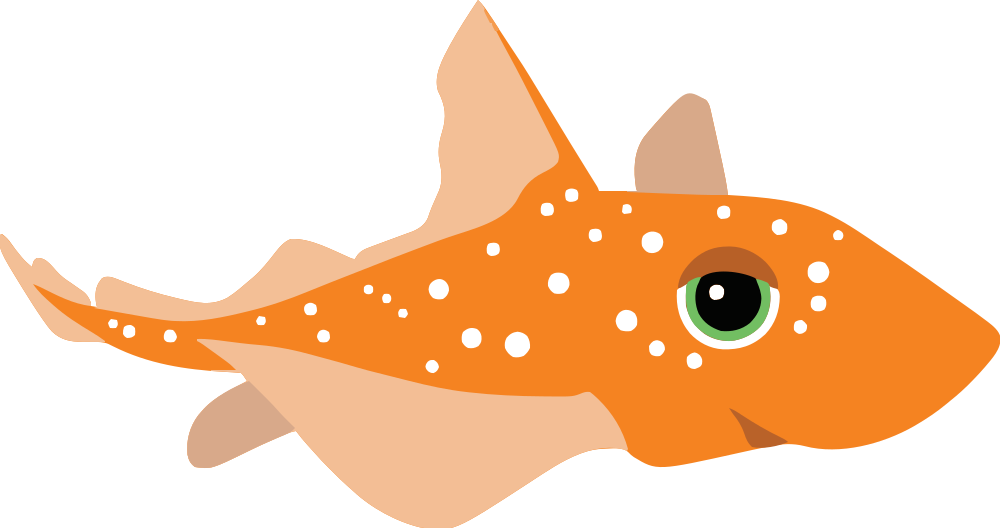
For decades, the only reason scientists knew the clown wedgefish (Rhynchobatus cooki) existed at all was its presence at markets in Singapore and Jakarta.
The small sharks that damaged a catamaran off the coast of Cairns have been described as “pencils with teeth” and they have a history of trying to eat inanimate objects, including submarines.
Researchers shed light on extraordinary adaptation of bull sharks (Carcharhinus leucas) to a surprising habitat: a freshwater golf course lake near Brisbane, Australia.
There is increasing evidence that ship strikes are a major cause of mortality for whales, sharks and other ocean giants. With the global fleet growing, some simple actions can turn things around.
On three occasions this year, smalltooth sand tiger sharks (Odontaspis ferox) have either washed up or been spotted in Irish and British waters.
Considered to be one of the world's rarest sharks, Angel sharks are classified as critically endangered. However, sightings over recent years suggest that a small population is living off the Welsh coast, including one on an Abersoch beach in Pen Llyn.
Sign up for the latest shark news, campaigns and simple ways to help, delivered straight to you.