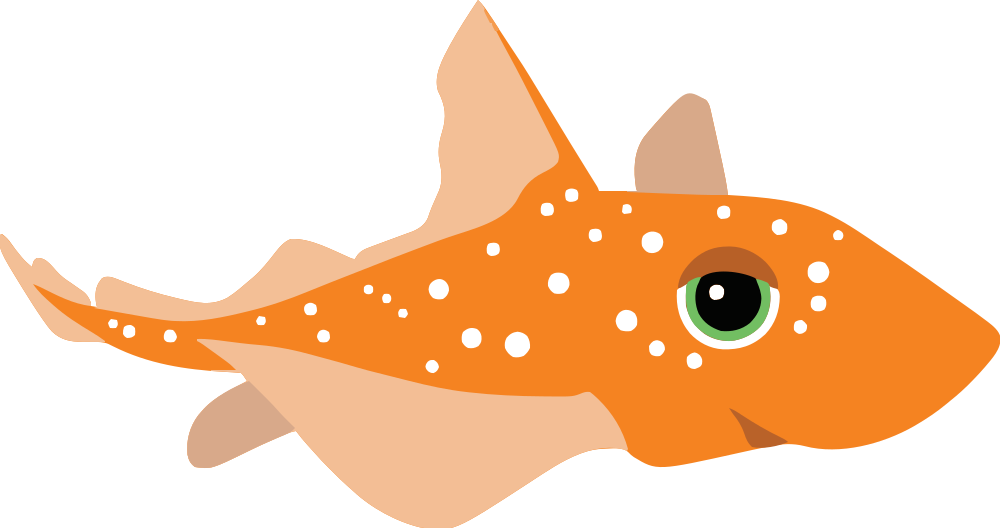

Sailfin Roughshark
Oxynotus paradoxus Frade,1929
Vulnerable- Maximum length
- 1.18 m
- Depth range
- From 265 to 720m.
- FAO code
- OXN
Meet the Sailfin Roughshark
- Also known as
- SAILFIN ROUGH SHARK, Sharpback Shark, Segelflossen-Meersau (DEU), Cerdo Marino Velero (ESP), Humantin (FRA), Pesce Porco Atlantico (ITA), Zeilvinruwhaai (NLD), Peixe-porco-de-vela (PRT).
How to identify

The numbers match the arrows on the illustration.
Short, blunt snout.
High, thick, triangular body.
Two large, sail-like dorsal fins with spines on leading edges and strongly concave trailing edges.
First dorsal fin angled back.
Small, circular spiracles.
Colouring & markings
Uniform blackish to dark brown.
No prominent markings.
Teeth
Upper jaw: 13; lanceolate teeth with smooth edged cusp. Lower jaw: 9; blade-like teeth with broad, serrated cusp.
How big do they get?
Where they live

Distribution
Northeast Atlantic from Scotland to Senegal, including the Azores, Canary Islands and Cape Verde. Absent from the Mediterranean Sea.
Habitat
Demersal from 265−720m on the Atlantic continental slope and mid-Atlantic ridge.
Go deeper
Size & biology
Birth: 25cm.
Matures: male 75cm.
Max. TL: 118cm.
Ovoviviparous; little else is known about this sharks biology or life history.
Diet unknown; thought to include small benthic fishes and invertebrates.
Conservation status
IUCN Red List: Global: Data Deficient (2009) Europe: Data Deficient (2015) A little known deepwater shark with no information on bycatch frequency. It’s life history characteristics and the overlap between its distribution, depth range and that of deepwater fisheries may make it vulnerable to overexploitation.
Management
Subject to prohibitions under the CFP, RFMO and FNA regulations.
Commercial importance
Currently not utilised commercially. A minor bycatch in deepwater trawl fisheries. Usually discarded but may be landed for fishmeal.
References & further reading
Assessment: OXN/NEA/2020
Azevedo et al.
Ebert et al.
Ebert & Stehmann.
Soldo & Freitas.
Soldo et al.